


What fuel should you put in your motorcycle and how to use less?
6 min. read


Hello everyone,
Today we are going to discuss the type of fuel to put in your motorcycle as well as a few tips to use less.
With the increase in fuel prices as well as the new names for fuels at the pump, it is all the more important to make the right choice for your machine.
If we obviously rule out diesel, between SP98, SP95, SP95-E10 or even Ethanol, who has never wondered which one to choose when it comes time to fill up your motorcycle's fuel tank? It is tempting to only look at the price: there is a difference of several cents between the different fuels. But what is the actual difference between these fuels? Are they all good for our engines?
First of all, what is fuel?
In the sense we mean here, it is the fuel for spark-ignition engines (that is, those that use a circuit with spark plugs to ignite the fuel). Diesel engines are not affected because they use the principle of diesel self-ignition.
Fuel is a product of natural origin since it comes from the distillation of petroleum. It has a lower density than diesel. Fuel is highly flammable and releases a large amount of heat and energy when it burns.
The new labels at the pump
Since October 12, 2018, gas stations have been equipped with additional symbols allowing you to distinguish the different fuels.
This new signage results from the implementation of a European directive aimed at harmonizing fuel labeling within the Union to make life easier for European road users by giving them a way to avoid confusion when filling up abroad.
In practice, the labels allow you to distinguish:
- The different fuels with a circular label: E5, E10 and E85
- The diesels with a square-shaped label: B7 and B10
- The gaseous fuels with a diamond-shaped label: H2, CNG, LNG, LP
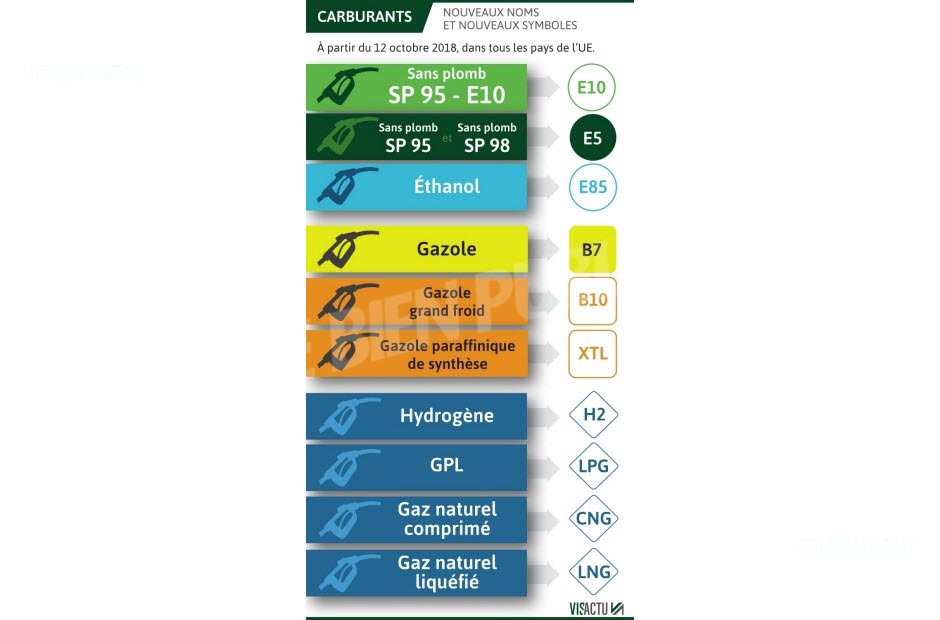
Since SP95 and SP98 are grouped under the "E5" label, you will need to rely on the old commercial names that will be maintained (on the nozzle heads and on the pump body) to make the right choice. Fuel retailers are indeed still relying on brands to promote their "premium" fuels (e.g. Total SP98 Excellium or Shell VPower SP98). However, it is likely that major retail chains, which do not distribute these fuels, will remove this double display more quickly.
So, what is best to put in your motorcycle?
The question troubles more than one motorcyclist. Technically, SP98 differs from SP95 by its slightly higher octane rating (87 instead of 85). The "premium" versions of these fuels are enriched with different additives (cleaner, stabilizer, anti-corrosion, friction modifier, etc.) supposed to help clean the systems of injection and intake of engines, while protecting them against wear and corrosion. In practice, all motorcycles powered by injection can indifferently burn SP95 or SP98. Indeed, the computer (ECU) corrects the ignition and injection time via the oxygen sensors and the knock sensors in order to optimize combustion. On older motorcycles (with carburetors), the difference can prove to be more sensitive (loss of power and knocking with SP95).
SP95-E10, to be avoided!!
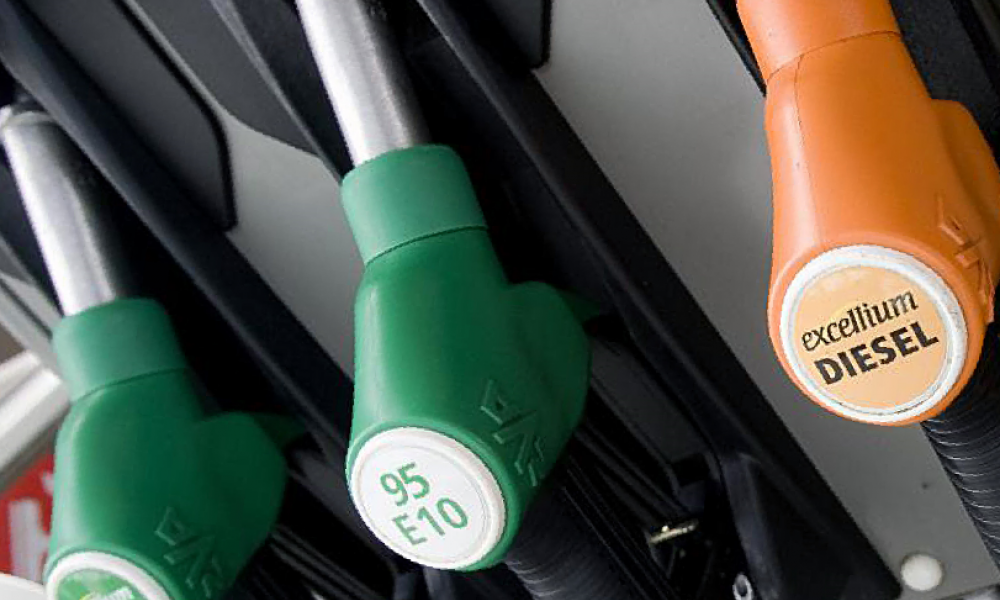
While it is increasingly rare to find "normal" unleaded 95 at gas stations, can you ride without risk on SP95-E10? You should know that it contains 10% ethanol, a biofuel derived from the distillation of plants (generally beets and wheat). However, the gasoline engines that run today on unleaded 95 are not all compatible with E10, especially in what concerns a large part of two-wheelers. Indeed, it oxidizes metals more quickly and heats up rubbers. So SP95-E10 should be avoided!
If you are forced to put it in your tank (under penalty of running out of fuel), don't panic! Your engine is not ruined and it is useless to siphon it out in an emergency. You just need to dilute it as quickly as possible by adding regular fuel little by little.
And ethanol in all this (E85)?
What is E85? E85 is a fuel made of gasoline and ethanol. Also called superethanol, its ethanol concentration varies between 65% and 85%. Derived from the processing of plants containing sugar or starch (beets, wheat...), and relying less on fossil fuels (petroleum), this fuel mainly offers an advantage in terms of cost since it is on average 40% cheaper than Unleaded gasoline, even if it leads to higher fuel consumption.
Used for a long time in some countries like the United States or Brazil, it made its appearance in France in 2007.
● The price advantage
What makes the major interest of superethanol is its price. Therefore, the purchase of a box or conversion kit is quite quickly paid off in the short term. Experts tend to show however that the lifespan of an engine would be reduced by about 20% with such kits.
● The ecological advantage
Total announces that its Superethanol E85 would allow a reduction of 42.6% of CO2 emissions. To this is added the fact that the dependence on fossil fuels would be less important.
For motorcyclists lacking ecology or money... For more than ten years, several manufacturers have launched themselves into the commercialization of ethanol conversion kits in order to guarantee the proper functioning of the engine and that it is correctly supplied with fuel thanks to a simple electronic control box. However, if you do not have this box on your motorcycle and it has not been tuned for SuperEthanol, do not put it in!
How to reduce your fuel consumption?
A motorcycle's fuel consumption will first vary according to the model and displacement. Indeed, some are more fuel-hungry than others. Regardless of the type or model of your two-wheeler, here are a few tips to help you reduce your consumption.
Optimize your riding
On a motorcycle, it is not recommended to turn the throttle handle to full during a start. The instantaneous consumption necessary to deliver the power to compensate for the inertia of your two-wheeler can then increase by about ten liters.
It is rather advised to do it gradually by shifting gears smoothly.
Especially if your engine is cold. It consumes more because of less optimized heat exchanges. You will not go faster but risk damaging your engine prematurely. Let your engine warm up for a few minutes. Ride gently the first 10 km of your trip.
Also avoid nervous driving, especially in the city where consumption is estimated at 30% more than on the highway. Brake less hard at the entrance of a curve and avoid accelerating to the max at the exit. Favor smooth driving, use your engine brake.
Take care of your motorcycle, maintain it regularly
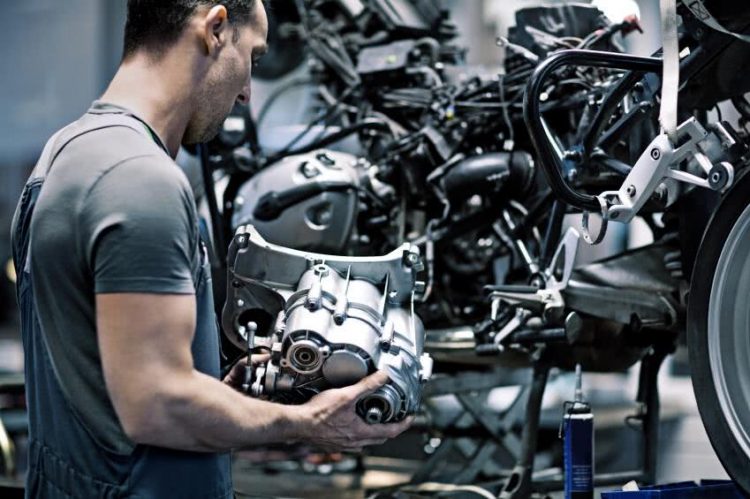
Serious maintenance of your two-wheel vehicle is not only synonymous with longevity, but also with a reduction in fuel costs. Likewise for the settings to check. Remember to check the following points:
- Your transmission chain for example, if it is not correctly tightened and regularly greased, your motorcycle will consume more than normal.
- Your air filter, which must be clean. The proper performance of an engine depends on the right mixture between air and fuel.
- Your spark plugs, of quality and in good working condition.
- Your tires at the right pressure. A motorcycle with under-inflated tires leads to additional consumption.
- Your oil of quality and with the level done. It is an element that comes into account in terms of the fuel consumption of a motorcycle. Oil that is too viscous forces the mechanical elements to absorb more power, which increases the use of fuel.
Also regularly check the synchronization of the carburetors (if your motorcycle has them) as well as the operation of the choke.
Lighten your motorcycle
The load supported by your motorcycle as well as the wind resistance is an important factor in terms of fuel consumption. Indeed, if you clutter your two-wheeler with luggage, it requires more power and your fuel level will decrease quickly. So when you do not use them, remove them.

Dress accordingly
Also avoid wearing loose clothes, because the wind would get into them and demand extra efforts from your motorcycle. If you do a lot of highway, you can also opt for a wind deflector or a high bubble in order to reduce wind resistance, for your fuel consumption and your driving comfort!
By Charlotte


